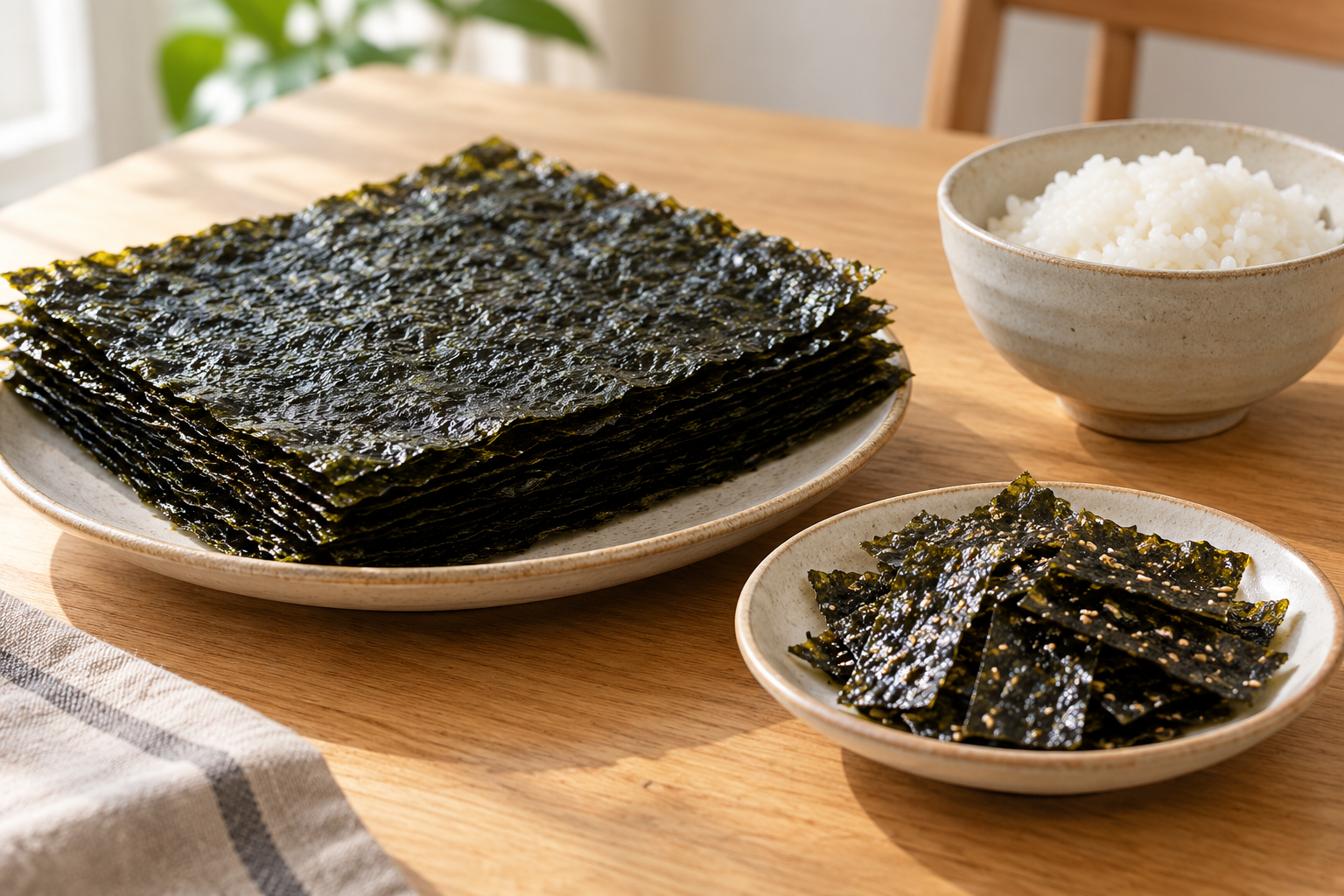
AI-generated illustration of gim and rice; not a photograph of a specific product or a tested recipe.
You pick up a packet of Korean seaweed, then notice a much larger pack beside it. Will both work for the same meal? Start with what you want to do: eat a crunchy snack, serve a little seaweed with rice, or roll gimbap. That decision is more useful than choosing by the picture on the front.
First, look for three different descriptions
Gim (김) is the Korean name used for dried laver. Korea’s Ministry of Oceans and Fisheries distinguishes dried, roasted and seasoned gim. These are useful shopping clues, not interchangeable promises about the ingredients.
Dried tells you about processing. Roasted tells you that heat has been applied, but does not by itself tell you whether oil or salt was added. Seasoned means you should look more closely at the ingredient list. Read the preparation directions too, rather than assuming every packet is ready to eat in exactly the same way.
For a snack or a rice side dish
If you want something to open and eat, choose a packet explicitly sold as a ready-to-eat snack or ready-to-eat seasoned seaweed. Small pieces can be convenient beside a bowl of rice; you do not need to commit to making a whole roll. Compare the ingredients and sodium information using the same serving size before deciding which packet suits you.
Prefer a different texture? VisitKorea’s shopping guide also mentions gimjaban, seaweed flakes, and gimbugak, seaweed chips. Check the actual product rather than treating sheets, flakes and chips as the same food. Coatings and seasonings can change what is inside.
For gimbap, check the format before you buy
Look for a full-sheet product labeled for gimbap (김밥용 or 김밥김), and check the recipe’s ingredient requirements. A tiny snack rectangle will not wrap a full roll. A salty, oily snack product may also give a different result from the plain sheets your recipe specifies. Buying the intended format is easier than trying to patch together small pieces later.
If your local shop lists the product as nori or laver, read the origin, sheet size, ingredients and intended use. The name on an imported package alone does not establish that it is Korean-made or that it matches a particular gimbap recipe. A photo of the back label can help you compare products without guessing.
The label matters for allergies, too
Do not assume a seaweed-based product is automatically suitable for every diet. Check added oils, flavorings and allergen statements, especially if you avoid sesame, soy, wheat or animal ingredients. For a serious allergy, ask the manufacturer if the label leaves anything unclear. Remove any enclosed moisture-absorbing sachet from the food and follow its warning; it is not a seasoning packet.
After opening: protect the crunch
Open only what you need, reseal the rest promptly, and follow the package’s storage instructions. Kikkoman’s ingredient guide notes that nori absorbs moisture and recommends an airtight container after opening. Keep dry sheets away from steam and use clean, dry utensils. Do not infer safety from crispness alone; follow the product’s date and discard damaged or visibly moldy food.
For a first purchase, keep it simple: one small ready-to-eat packet if you want a snack, or one full-sheet pack intended for your gimbap recipe. Once you know which texture and seasoning you enjoy, the larger selection becomes much less confusing.
Leave a Reply