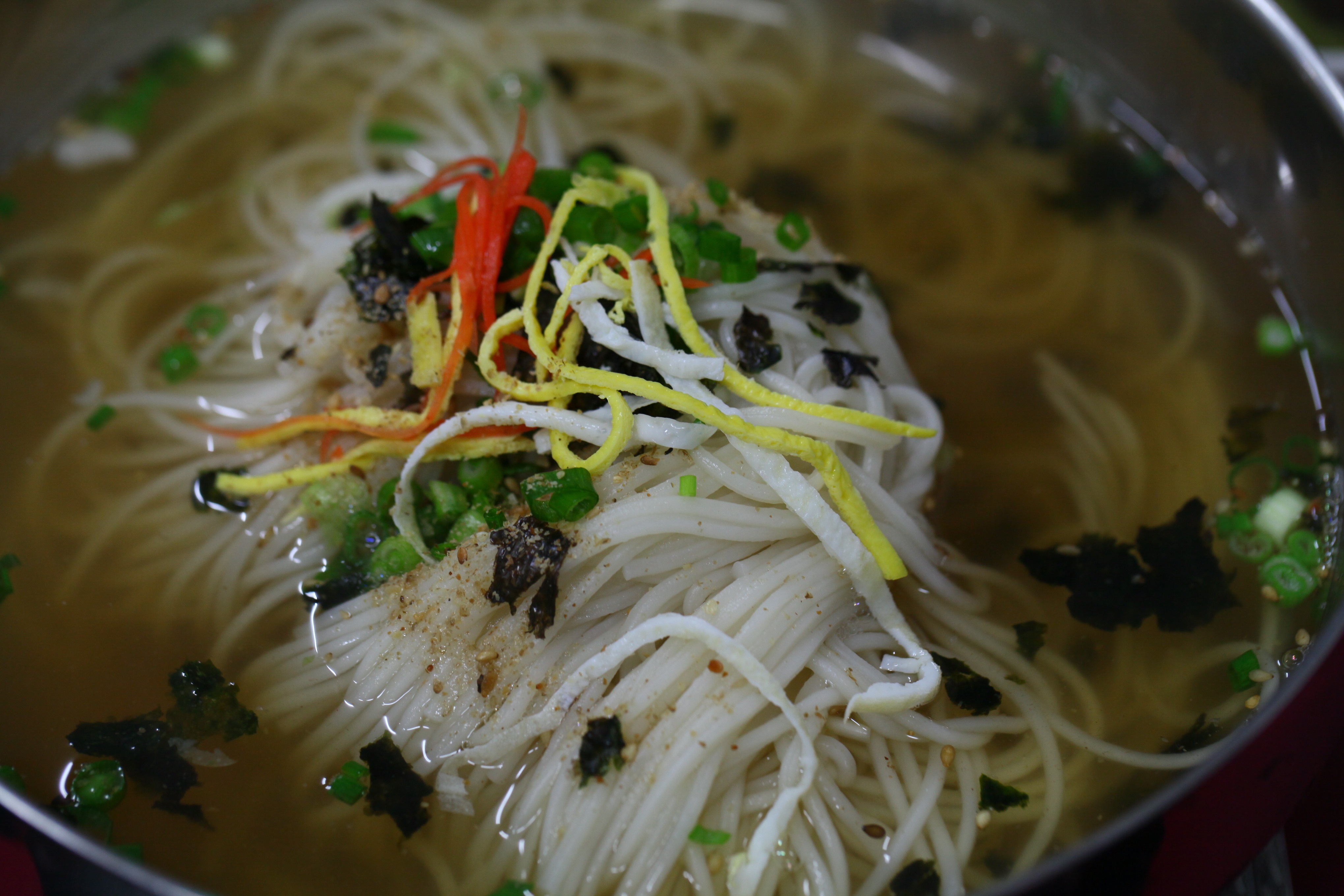
Photo: daecheonnet / Wikimedia Commons, CC0 1.0. A serving example, not a photograph of this recipe or a cooking class. Resized and, where the layout requires, cropped for display.

Want a Korean noodle bowl with a gentle broth? Janchi-guksu (잔치국수) brings together thin wheat noodles and small toppings. This beginner recipe makes two bowls with prepared stock, so you can concentrate on the noodles and seasoning.
Why are they called banquet noodles?
The Korea Foundation’s Koreana article connects the name with noodles served at celebrations. You can also make a bowl for an ordinary meal. The Korean Cultural Center in Mexico included janchi-guksu in its March 2–4, 2026 cooking program. That past class is a concrete local learning example, not a current registration offer or a worldwide popularity ranking.
Ingredients for two
200 g dried somyeon (thin wheat noodles); 1 liter prepared, lightly salted anchovy stock or vegetable stock; 100 g zucchini; 50 g carrot; 1 egg; 1 scallion; 2 teaspoons neutral cooking oil; 1 teaspoon soy sauce to start, with more to taste; a little salt if needed. Optional: torn roasted gim and ½ teaspoon toasted sesame oil.
Use ready-to-cook stock, or prepare a stock powder or sachet according to its package and remove the sachet as directed. Vegetable stock changes the flavor and avoids the anchovy ingredient, but check every label for allergens. Soy sauce saltiness varies, so do not add it all by habit.
How to make the noodle bowls
1. Prepare the toppings. Wash the vegetables. Cut zucchini and carrot into thin matchsticks and slice the scallion. Warm 1 teaspoon oil in a frying pan, add the carrot and zucchini, and stir until tender. If they stick, add a spoonful of water. Transfer to a clean plate.
2. Cook the egg. Beat the egg. Add the remaining teaspoon of oil to the pan and cook a thin omelet, turning it carefully until both sides are set and no liquid egg remains. Put it on a clean board and cut into strips.
3. Heat and season the stock. Bring it to a simmer in a separate pot. Taste, then add up to the starting teaspoon of soy sauce. Add more only if needed. Keep it hot while you cook the noodles.
4. Cook the somyeon separately. Use a roomy pot and the water quantity and cooking time on the noodle package. Stir to separate the strands and watch for foaming. Drain carefully, rinse with clean cold water, and drain well. Divide between two heat-safe bowls.
5. Finish immediately. Pour the hot stock over the noodles, add vegetables, egg and scallion, and finish with optional gim or sesame oil. Take care with the bowls and steam. Eat promptly rather than leaving the noodles to soften in the broth.
A few checks before cooking
Somyeon contains wheat; soy sauce commonly contains soy and wheat. Anchovy stock contains fish, egg is included here, and optional sesame oil contains sesame. Stock mixes can contain additional allergens. If cooking for someone with an allergy, check the whole ingredient list and avoid cross-contact.
The aT Center America recipe booklet, printed page 33, provides a reference for separate noodle cooking and broth variations. The quantities and simplified prepared-stock approach above are this guide’s version. It has not been kitchen-tested by this site; use package directions and the doneness checks rather than an assumed total cooking time.
Leave a Reply